8th May 2017
Another warm, sunny day. After showering, we set off early and headed south towards Whakatane. The scenery gradually transformed from pleasant, Shire-like rolling hills to flatter land, dotted with kiwi fruit orchards. In the distance to our right, volcanic peaks occasionally punctuated the horizon.
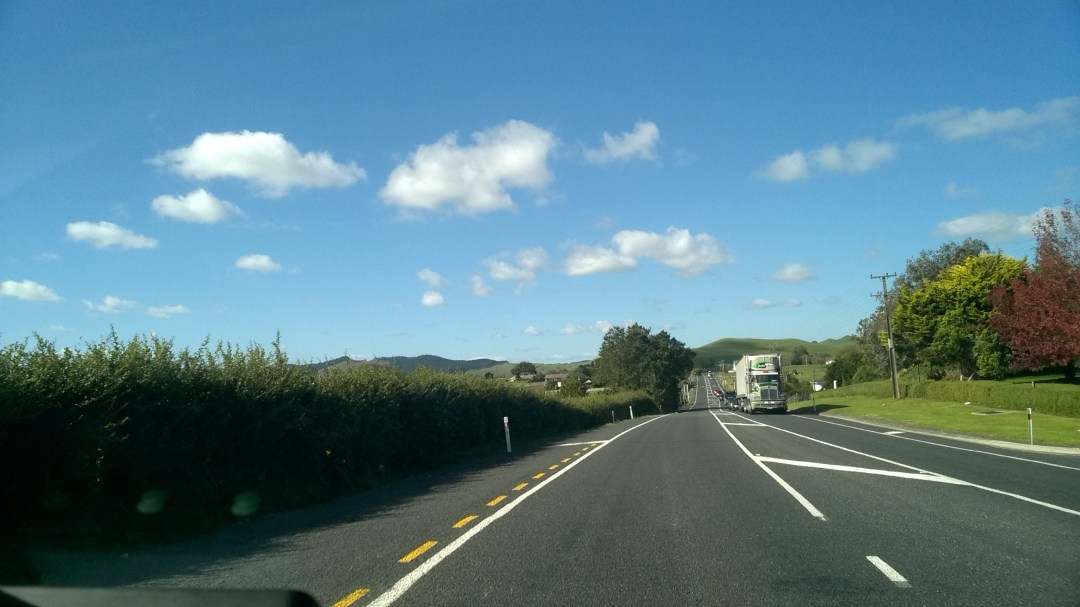
We’ve both been struck by how tidy everything is in New Zealand. The Kiwis take great pride in their homes; the bungalow-style houses are always well-kept, with neatly trimmed lawns and hedges. Even the pavements, where the grass meets the concrete, are perfectly edged. I can’t imagine councils in the UK paying such close attention to detail.
We arrived at our destination before 10 am and quickly found the White Island Tour offices we’d been looking for. We added our names to the list for the following morning’s trip (provided it goes ahead, depending on numbers and the weather). White Island is New Zealand’s only active marine volcano, and the journey involves a 50-minute boat ride to reach it, complete with gas masks to reduce the risk of fatalities from noxious fumes.
On our way back to the van, we stumbled across a Maori Meeting House. We let ourselves in and were welcomed by a heavily tattooed Maori, who kindly explained the building’s traditions and history. Built in 1875, the house was intended to unite the local tribes and demonstrate their strength to the encroaching white settlers. Since then, it has travelled to Auckland, Australia, and London before returning to Whakatane in the 1990s, where it was restored and rebuilt.


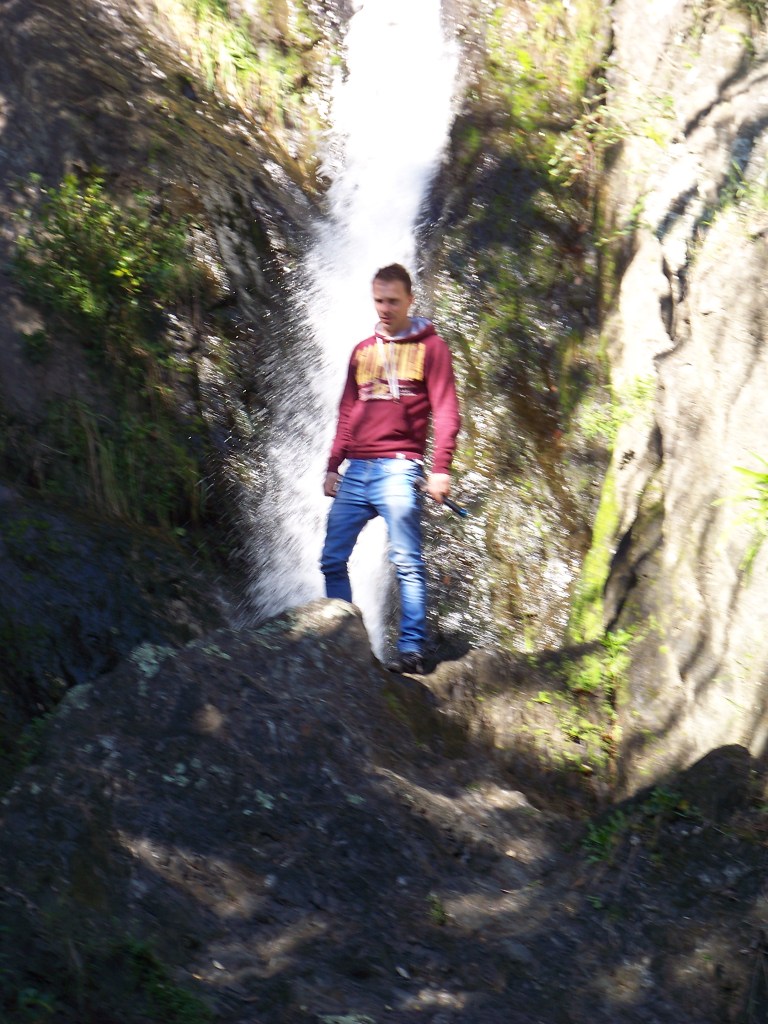
Next, we visited the waterfall, which, according to Maori tradition, was one of the key features early Polynesian settlers sought when choosing a place to establish a settlement. The other essential features were a rock within a river and a cave. After the waterfall, we made our way to visit the rock, followed by the cave.
Feeling hungry, we headed into town for lunch and dined at a Turkish restaurant.


Returning to the van, we found a campsite within the town boundary and checked in. The site is undergoing a change in management, and the process took longer than expected.
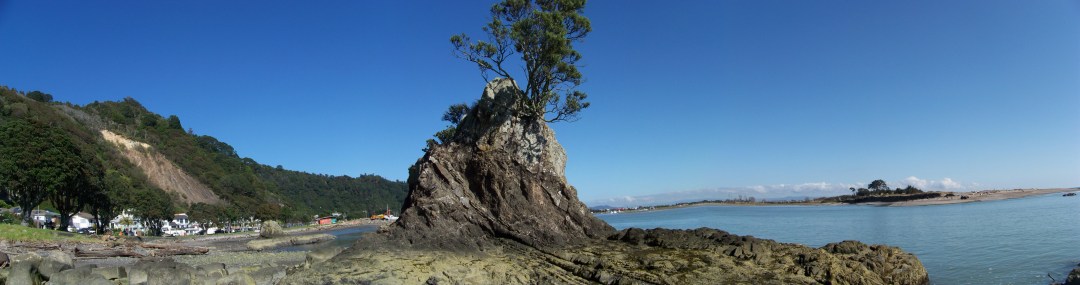
Afterwards, we drove a few more kilometres south to Ohope Beach, renowned as New Zealand’s favourite beach. It was long, with silver sands and had excellent facilities for children, but it didn’t hold much interest for Jamie and me. After a brief wander, we continued further south to a nature reserve dedicated to the Dotterel.
The reserve is a long, narrow spit of sandy dunes, home to both the birds and a golf course. We walked around the spit, returning by crossing the golf course. Dotterels were plentiful, but we found them to be rather skittish.
We returned to the campsite and spent some time sitting outside the van listening to the radio and enjoying the late evening sun with a few refreshments. As the sun dipped below the horizon, we were entertained by the local rabbits hopping between the various vehicles. They came surprisingly close.
Later that evening, we drove the short distance into town for a bite to eat and a few games of pool. Afterwards, we caught a film at the local cinema, ‘Get Out’. It was an intriguing psychological thriller that left us feeling a little spooked as we walked back to the van, down dark, deserted streets. Very like in the plot of the film, Whakatane is an eerily quiet place at 11:30 pm on a Sunday night!


Leave a Reply